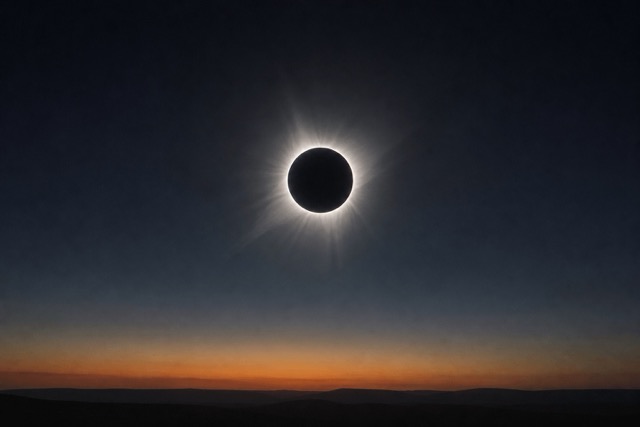
The UK will witness a major partial solar eclipse on 12 August 2026. Discover the best viewing locations, exact timings, safety tips, and how much of the eclipse you’ll see across England, Scotland, Wales, and Northern Ireland.
Solar Eclipse UK 2026: Everything You Need to Know
On 12 August 2026, the United Kingdom will experience one of the most significant astronomical events of the decade — a deep partial solar eclipse visible across the entire country. While totality will occur in Spain, Iceland, and Greenland, the UK will still enjoy a dramatic celestial display with up to 85% Sun coverage in some regions.
This guide provides everything UK viewers need: timings, visibility maps, best viewing spots, safety advice, and photography tips.
🌒 What Is Happening on 12 August 2026?
A solar eclipse occurs when the Moon moves between the Earth and the Sun, blocking part of the Sun’s light. In the UK, the 2026 eclipse will appear as a large crescent Sun, creating a noticeable dimming of daylight and a unique atmospheric shift.
🌍 How Much of the Eclipse Will the UK See?
England
Most of England will see 60–80% coverage. Cities like Birmingham, London, Manchester, and Leeds will have excellent visibility.
Scotland
Scotland will experience the deepest eclipse in the UK — up to 85% coverage in northern areas.
Wales
Wales will see around 70–75% coverage, depending on location.
Northern Ireland
Coverage will be similar to northern England, around 70–80%.
Even without totality, this level of coverage creates a striking visual effect.
🕒 UK Eclipse Timing: When to Watch
The eclipse will occur around midday to early afternoon, making it easy for most people to observe.
Typical UK timeline:
- Start: Late morning
- Maximum eclipse: Early afternoon
- End: Mid‑afternoon
This midday timing ensures the Sun is high enough for clear viewing from parks, gardens, and open spaces.
📍 Best Places in the UK to Watch the Eclipse
Top Urban Viewing Spots
- London: Greenwich Park, Primrose Hill, Hampstead Heath. Start: 10:56, Maximum Eclipse: 12:13
- Birmingham: Sutton Park, Cannon Hill Park. Start: 10:54, Maximum Eclipse: 12:11
- Manchester: Heaton Park, MediaCityUK waterfront. Start: 10:52, Maximum Eclipse: 12:10
- Edinburgh: Arthur’s Seat, Calton Hill. Start: 10:48, Maximum Eclipse: 12:06
Best Scenic & Rural Locations
- Peak District
- Lake District
- Snowdonia
- Scottish Highlands
These areas offer wide horizons and lower light pollution — ideal for photography.
🔒 Safety: How to View the Eclipse Properly
Never look directly at the Sun without protection.
You MUST use:
- ISO‑certified solar eclipse glasses






- Solar filters for cameras, telescopes, and binoculars
BP-6X6 6 inchx6 inch Solar Filter Sheet for Telescopes, Binoculars and Cameras
Avoid:
- Sunglasses
- Phone screens
- Smoked glass
- DIY filters
Even during deep partial coverage, the Sun remains dangerously bright.
📸 Photography Tips for UK Eclipse Viewers
- Use a solar filter at all times
- Stabilise your camera with a tripod
- Use manual focus
- Capture the environment as well as the Sun
- Try wide‑angle shots to show the changing light
Even smartphones can capture excellent images with proper filters.
🌤️ Weather Considerations
August weather in the UK can be unpredictable. To maximise your chances:
- Choose a location with a wide horizon
- Check cloud forecasts the day before
- Have a backup viewing spot
Even short breaks in cloud cover can provide excellent views.
❓ Frequently Asked Questions
Will the UK see totality?
No — only Spain, Iceland, and Greenland will.
Is the UK eclipse still worth watching?
Absolutely. A deep partial eclipse is rare and visually striking.
Will it get dark?
It will dim noticeably, but not fully dark.
Do I need special glasses?
Yes. Eclipse glasses are essential for safe viewing.
Can children watch it?
Yes, with proper supervision and certified eclipse glasses.
⭐ Final Thoughts
The Solar Eclipse of 12 August 2026 is a rare and exciting event for UK viewers. Whether you watch from Birmingham, London, Edinburgh, or a scenic national park, you’ll witness a dramatic partial eclipse that won’t occur again in this form for many years.
Mark the date, prepare your eclipse glasses, and enjoy one of nature’s most extraordinary spectacles.