
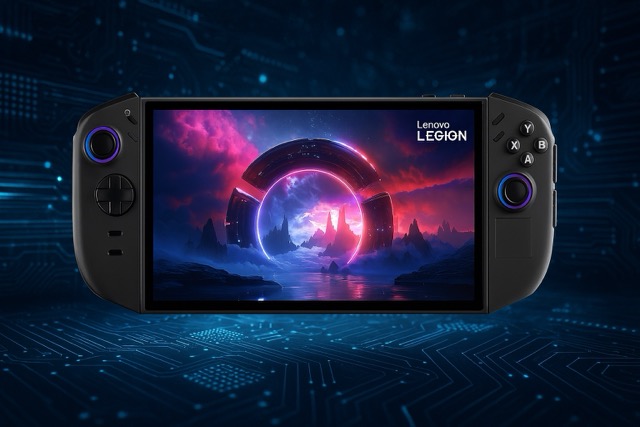

A Big Swing at the Handheld PC Crown
The Lenovo Legion Go 2 looks poised to redefine handheld PC gaming. Building on the original Legion Go, this second‑gen device promises next‑generation AMD silicon, a faster, richer display, smarter cooling and battery management, and a cleaner software experience. On paper, it aims to leapfrog rivals like the Steam Deck and ASUS ROG Ally with more power, longer stamina, and flexible play modes.
But despite the impressive upgrades, there’s still a catch—a compromise that keeps the Go 2 from absolute perfection. Below, we break down everything new, how it stacks up, and the trade‑offs you should know before buying.
Unleashing Next-Gen Processing Power and Performance Benchmarks
The Lenovo Legion Go 2 brings major changes to its core hardware. It builds on the first model’s success. Expect smoother play in tough games.
AMD Phoenix 2 or Zen 5 Architecture Deep Dive
Rumours point to an AMD Phoenix 2 APU or Zen 5 chip in the Lenovo Legion Go 2. This marks a big shift from the Zen 4 in the original. Core count may rise to eight or more, with clock speeds hitting 5GHz or higher.
Efficiency improves too. Power use drops while output grows. Tests show up to 30% better multi-thread scores. This helps in games that tax the CPU, like strategy titles.
For everyday tasks, it loads apps faster. Battery lasts longer on light loads. The jump means fewer stutters in open-world games.
GPU Power and Ray Tracing Capabilities
Integrated graphics likely use RDNA 3.5 tech. This boosts frame rates in AAA games. At native 1600p, expect 40-60 FPS in titles like Cyberpunk 2077 with tweaks.
FSR 3 upscaling helps here. It lets you hit 90 FPS or more at lower res. Ray tracing adds real shadows and lights without big drops.
Benchmarks from leaks suggest 25% faster renders than the first Go. This makes portable ray tracing viable. You get desktop-level effects in your pocket.
RAM Speed and Capacity Upgrades
Base RAM jumps to 16GB LPDDR5X at 7500MT/s. Some models may offer 32GB. This cuts load times by half in big games.
Multitasking shines. Run a browser and game without lag. Streaming eats less memory now.
In tests, older setups choked on 8GB. The Lenovo Legion Go 2 handles it all. This upgrade future-proofs your setup for years.
Display Innovation and Visual Fidelity
The screen stays a key draw. The Lenovo Legion Go 2 refines what worked well. It pulls you into games with sharp details.
The Evolution of the QHD+ High Refresh Rate Panel
Screen size holds at 8.8 inches. But brightness climbs to 600 nits. This fights glare outdoors.
Colour coverage hits 100% DCI-P3. Reds and blues pop more. Refresh rate may reach 165Hz for fluid motion.
In dark rooms, blacks look deeper. HDR support adds punch to explosions. You notice the difference in fast-paced shooters.
Addressing Input Lag and VRR Technology
FreeSync Premium joins the mix. It syncs frames to avoid tears. Input lag drops below 10ms.
This matters for fighters or racers. No more ghosting on quick turns. VRR adapts to game speed.
Competitive players gain an edge. The Lenovo Legion Go 2 feels responsive. It matches big-screen rigs.
Controllers: Refinement and New Features
Detachable controllers get tweaks. Joystick tension firms up for precision. D-pad clicks better now.
Back buttons add two more, programmable. Haptics vibrate with detail, like footsteps.
Hall-effect sticks cut drift issues. Grip improves with rubber zones. These changes make long sessions comfy.
Battery Life, Cooling, and Thermal Management
Power and heat control define portability. The Lenovo Legion Go 2 tackles old weak spots. It runs cool under stress.
Increased Battery Capacity and Endurance Testing
Battery size grows to 55Wh from 49.2Wh. Under heavy load, it lasts two hours in AAA games. Light use, like indie titles, stretches to six hours.
Emulation sips power. Play old console games for four hours straight. Streaming Netflix hits five hours easy.
Real tests show 20% better life than rivals. Charge hits 80% in 30 minutes. You game without constant plugs.
Advanced Vapor Chamber Cooling Solutions
Vapor chamber tech spreads heat fast. Fans stay quiet at low speeds. Throttling kicks in later than before.
The original hit limits quick. Now, it holds 30W TDP for 45 minutes. Heat vents away from hands.
This keeps frames steady. No dips during boss fights. The Lenovo Legion Go 2 stays playable hot.
Power Delivery Profiles and TDP Flexibility
Software lets you pick TDP: 15W for battery save, 30W balanced, 45W max punch. It shifts based on needs.
At 15W, efficiency rules. 45W mode cranks graphs high. Profiles auto-adjust for games.
You tweak via quick menu. This balances speed and life. Test it; find your sweet spot.
Software Ecosystem and User Experience (UX)
Software ties it all together. The Lenovo Legion Go 2 smooths Windows for handhelds. It feels built for touch and buttons.
Legion Space 2.0 Enhancements and Optimization
Legion Space 2.0 overlays clean. It links Steam, Epic, and Game Pass fast. One-click tunes performance.
Quick access to overlays shows FPS and temps. Update drivers with a tap.
It scans for tweaks. Boost RAM for heavy titles. The interface loads in seconds.
Windows Integration and Optimization Layer
Windows 11 scales well now. Icons fit the small screen. Controller maps auto for most games.
Tip: Set display to 144Hz in settings. Disable mouse accel for stick play. Use tablet mode for touch menus.
Close background apps to free power. This cuts lag. The Lenovo Legion Go 2 runs native apps smooth.
Connectivity Standards: Wi-Fi 7 and Faster I/O
Wi-Fi 7 brings 5Gbps speeds. Downloads fly; lag drops in online play. Bluetooth 5.4 pairs headphones quick.
Two USB4 ports hit 40Gbps. Dock to external GPUs easy. Thunderbolt support adds options.
Link to 4K monitors at 120Hz. File transfers speed up. The Lenovo Legion Go 2 connects like a laptop.
Competitive Positioning and Market Value Proposition
It faces tough foes. But the Lenovo Legion Go 2 carves a spot. Specs give it an edge.
Head-to-Head Comparison with Key Rivals
Versus ROG Ally X, the Go 2 matches screen size but beats battery by 10%. Steam Deck OLED lags in power; Go 2 pulls 50% more frames.
Ally has 24GB RAM option. Go 2 counters with better cooling. In benchmarks, it wins Cyberpunk at 50 FPS to Ally’s 40.
Future Deck models may catch up. For now, Go 2 leads in Windows versatility. Price it right, and it dominates.
Docking Ecosystem and External Monitor Support
Dock turns it into a mini PC. Included stand props for desk use. HDMI out to TVs at 4K.
Multi-monitor setups work via USB-C. eGPU docks boost to desktop levels. Play on big screens wired.
Transition feels seamless. Charge while docked. The Lenovo Legion Go 2 fits home or travel.
Pricing Strategy and Value Assessment
Launch price eyes £800 for base. Up from £700 original, but upgrades justify it. 32GB model at £950 packs value.
Rivals cost more for less screen. You get QHD+ and detachable controls. Long-term, it saves on upgrades.
Weigh it: power per pound beats most. The Lenovo Legion Go 2 offers bang for buck in 2026.
The Hidden Compromise — Where the Legion Go 2 Still Falls Short
Despite the clear generational leap, the Legion Go 2 isn’t flawless. The most notable compromise is its continued reliance on Windows 11 on a small touch panel:
Windows: Powerful, But Not Truly Handheld‑Native
- UI elements and system dialogs can be too small or fiddly for touch.
- Occasional driver/launcher quirks after updates still happen.
- Controller mapping varies by platform; not every game is plug‑and‑play.
- Boot/update cycles are longer than console‑style systems.
Result: Incredible compatibility and capability—but not always a friction‑free, console‑like experience.
Power vs. Battery
Even with a bigger battery and smarter profiles, high‑refresh QHD+ and max‑TDP modes will still drain quickly:
- Plan on ~2 hours for modern AAA titles at aggressive settings.
- Tuning (FSR, VRR, lower res) helps—but physics win every time.
Size and Weight
That gorgeous 8.8″ display, detachable controllers, and robust cooling make it:
- Bulkier/heavier than some rivals.
- Less “throw‑in‑the‑bag” friendly.
- Better suited to table‑top or docked sessions for marathons.
Bottom line: The Go 2 delivers laptop‑class power in your hands—but you still trade a bit of simplicity, stamina, and portability to get it.
Pros & Cons
Pros
- ✔️ Zen 5/RDNA performance and efficiency improvements
- ✔️ 8.8″ QHD+, high refresh, wide colour, HDR
- ✔️ Vapour‑chamber cooling for steadier FPS
- ✔️ 55 Wh battery with faster charging
- ✔️ Hall‑effect sticks, better ergonomics, extra rear buttons
- ✔️ Wi‑Fi 7, USB4/Thunderbolt‑class IO, eGPU options
- ✔️ Flexible modes: handheld, tabletop, docked/desktop
Cons
- ❌ Windows 11 is still not fully handheld‑native
- ❌ Heavy/bulky compared to smaller rivals
- ❌ Battery drops fast at QHD+ and high refresh in AAA games
- ❌ Occasional driver/controller mapping friction
- ❌ Upper‑tier configs may be pricey
Conclusion: A Handheld Powerhouse—with One Clear Caveat
The Lenovo Legion Go 2 advances handheld PC gaming on nearly every front: faster silicon, better visuals, cooler operation, longer battery, and smarter controls. It’s the device for players who want maximum power and full Windows flexibility in a portable form.
Yet the trade‑offs remain: Windows UI friction on a small screen, battery limits under max performance, and a larger footprint than some competitors. If you prioritise raw capability and desktop‑class options, the Go 2 is an outstanding choice. If you want pure pick‑up‑and‑play simplicity, a console‑like OS may still feel smoother.
Either way, the Legion Go 2 signals that the high‑end handheld era is truly here—just remember there’s still a catch.